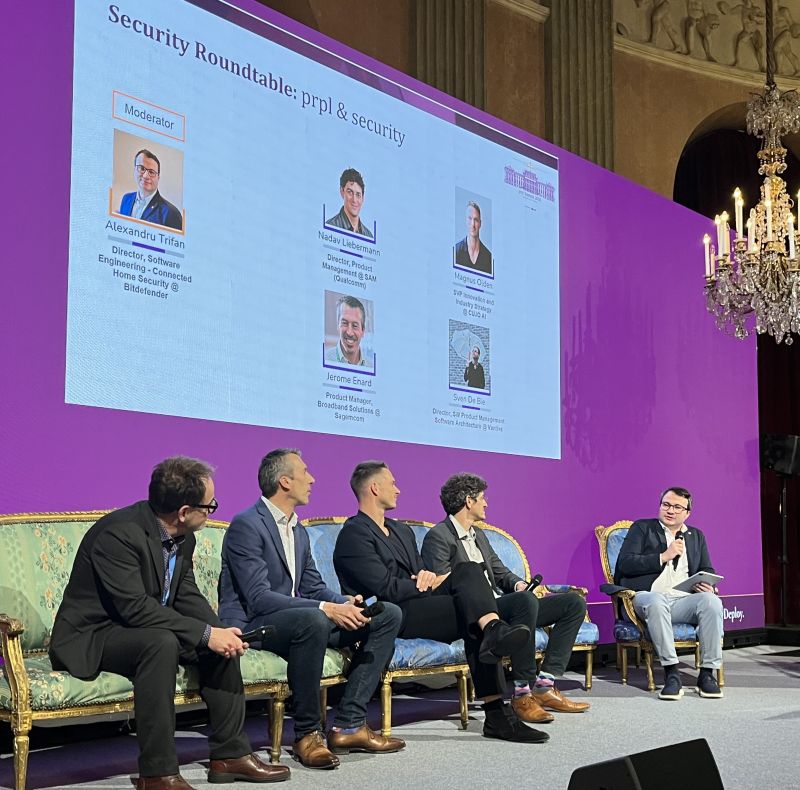
The security roundtable was among the most spirited sessions at Monday’s prpl Summit in Vienna. It was hosted by Alexandru Triifan of Bitdefender, the event’s Executive Partner this year. Alex was joined by Nadav Liebermann from Quallcomm (SAM); Sagemcom’s Jerom Enard; Cujo AI’s Magnus Olden; and and Vantiva’s Sven De Bie. My highlights of the discussion as follows:
Cybersecurity is built into the prpl ecosystem in layers: Sven (Vantiva) highlighted the universal security features built into the prpl standards themselves (initial boot up; validation in development, pre-release as well as in maintenance mode). Jerome (Sagemcom) also cited pen-testing of the CPE as critical, something which is now augmented via the use of AI. Sven also cited the need for vendors to keep close track of their SBOM. He joined Alex (Bitdefender) in championing the role prpl plays in enabling fixes for flaws to be rolled out rapidly. On top of that core security baseline that prpl provides, telcos can then sell householders security apps from security software vendors to monitor, detect and mitigate cyber threats to apps, services and devices in the home.
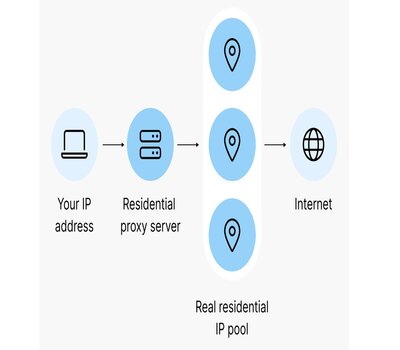
Nadav (Qualcomm – SAM) pointed to the role of different stakeholders in the home security ecosystem: end users, telco product teams; telco engineering and security operations teams all have a stake in the ecosystem’s success. If the goal is to secure the entire ecosystem, then arguably each stakeholder ought to be contributing in some way. Magnus (Cujo AI) flagged the heightened risk that threats from residential proxies now pose to all stakeholders.
Panelists agreed that the ongoing memory cost crisis is impacting vendors of security apps. Nadav (Qualcomm SAM) and Magnus (Cujo AI) pointed to memory costs driving some telco customers to demand better memory efficiency as well as better use of legacy CPE deployed in the field.
Magnus (Cujo AI) noted that a careful balance needs to be struck between automating the response to cybersecurity threats in the home and notifying a consumer of an issue. There may be a case for notifications in some cases but over-communicating can trigger unnecessary concern (not to mention unnecessary customer care calls).
All panelists agreed that as of today, attackers are making better use of AI than defenders. Alex (Bitdefender) said AI represents an opportunity for cybersecurity vendors to reinvent their approach to designing and building solutions. Panelists differed as to whether defenders are on track to make up the gap in the near, medium or long term (or whether they will even close the gap at all).